why sodium and potassium kept in kerosene oil Most metal dipped in water sinks, but why does sodium float?
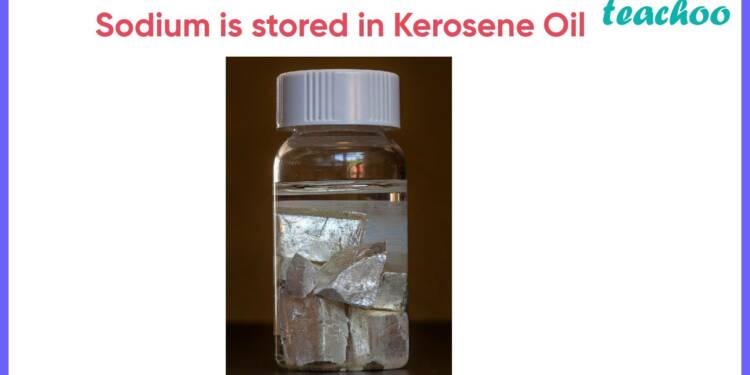
Sodium and potassium, two highly reactive metals, are commonly stored in kerosene oil. There are several reasons why this is done, and in this post, we will explore the rationale behind this practice.
Safety is a Priority
The primary reason for immersing sodium and potassium in kerosene oil is safety. Both of these metals react vigorously with oxygen in the air, leading to the formation of oxides. These oxides can catch fire or explode upon contact with moisture in the atmosphere.
Kerosene oil, being a nonpolar solvent, effectively acts as a barrier between the highly reactive metals and the oxygen in the air, preventing any unwanted reactions. This minimizes the risk of accidents and ensures the safe storage of sodium and potassium.
Preventing Oxidation
Another crucial reason for storing sodium and potassium in kerosene oil is to prevent their oxidation. Both metals have a strong tendency to combine with oxygen, leading to the formation of metal oxides. In the case of sodium, sodium oxide (Na2O) is formed, while potassium forms potassium oxide (K2O).
By immersing these metals in kerosene oil, which lacks oxygen, the contact between the metals and the surrounding air is restricted. This effectively prevents oxidation from occurring and helps maintain the metals in their pure state.
Reducing Reactivity
Sodium and potassium are highly reactive metals. When they come into contact with air or moisture, they can react violently, leading to the release of flammable hydrogen gas. Storing these metals in kerosene oil helps reduce their reactivity by creating a controlled environment.
Kerosene oil acts as a barrier to moisture and air, preventing the metals from reacting and keeping them isolated from external factors. This greatly reduces the risk of accidental fires and explosions.
Easy Extraction and Handling
Storing sodium and potassium in kerosene oil also facilitates their extraction and handling. As both metals are highly reactive, direct contact with air or moisture can make them dangerous to handle. Kerosene oil provides a safe medium for their extraction, allowing professionals to work with them more easily.
Additionally, when stored in kerosene oil, the metals are more stable and less prone to becoming slippery. This makes it easier to retrieve them when needed for various chemical reactions or experiments.
In conclusion, the practice of storing sodium and potassium in kerosene oil is primarily driven by safety concerns. By immersing these metals in a nonreactive medium, the risk of accidents and unwanted reactions is minimized. Moreover, this method helps prevent oxidation, reduces reactivity, and simplifies the extraction and handling of these highly reactive metals. It is crucial for professionals working with sodium and potassium to adhere to these safety measures to ensure their own well-being and the smooth progress of their research or experiments.
If you are looking for Why is sodium kept immersed in kerosene? – Learn Online study you’ve came to the right page. We have 5 Pictures about Why is sodium kept immersed in kerosene? – Learn Online study like Give reasons why sodium and potassium are stored in kerosene?, Why is sodium kept immersed in kerosene? – Learn Online study and also Most metal dipped in water sinks, but why does sodium float? - Quora. Here you go:
Why Is Sodium Kept Immersed In Kerosene? – Learn Online Study
 bazargoods.comWhy Is Sodium Kept Immersed In Kerosene Oil? Detail Explanation
 tfiglobalnews.comGive Reasons Why Sodium And Potassium Are Stored In Kerosene?
 goprep.coWhy Is Sodium Kept Immersed In Kerosene Oil?
 www.toppr.comMost Metal Dipped In Water Sinks, But Why Does Sodium Float? - Quora
www.quora.comWhy is sodium kept immersed in kerosene oil?. Give reasons why sodium and potassium are stored in kerosene?. Why is sodium kept immersed in kerosene oil? detail explanation